



New-build homes in Barcelona in 2026: an expert guide to buying with confidence

What to review before buying a new-build home in Barcelona in 2026: location, construction quality, energy efficiency, purchase conditions and a professional checklist
Buying a new-build home in Barcelona in 2026 goes far beyond choosing a good location or being drawn in by attractive renders. In a mature, highly competitive urban market with limited quality supply, the difference between a decent purchase and an excellent one lies in how the home actually performs once you live in it.
This guide brings together the criteria professionals use when assessing a new-build property, aimed at buyers who value real comfort, construction coherence and homes designed to work well both now and in the long term.
1. Location: the neighbourhood matters, but the micro-location matters more
In Barcelona, two buildings on the same street can offer completely different living experiences. The true value of a home lies in its immediate surroundings.
Before deciding, it’s worth observing:
-
Noise levels at different times of day
-
Actual street activity (traffic, terraces, loading areas)
-
The relationship between surrounding buildings: street width, courtyards, heights
-
Visual privacy between windows and balconies
A good micro-location isn’t the most talked about one, but the one that fits naturally into your daily routine.
2. Natural light: orientation, geometry and surroundings
In dense urban environments, natural light depends on more than just orientation.
Key factors include:
-
Orientation of main living spaces
-
Floor level
-
Depth of the apartment
-
Presence of nearby buildings or party walls
A well-lit home is one where light supports everyday use of the space, not just the main façade.
3. Layout: don’t buy square metres, buy liveable space
In new-build homes, layout defines everyday comfort.
Pay attention to:
-
The ratio between usable space and circulation areas
-
Clear, efficient circulation
-
Logical connection between kitchen, dining and living areas
-
Real storage capacity
A good layout feels effortless and purposeful from day one.
4. Windows and façades: where comfort is truly defined
In a city like Barcelona, thermal and acoustic comfort largely depends on external joinery and glazing.
Beyond aesthetics, it’s important to understand:
-
How well windows seal
-
The type of glazing used
-
Solar protection solutions integrated into the design
Quiet, thermally stable homes usually start here.
5. Acoustics: a silent but decisive factor
Noise has a major impact on quality of life and is often underestimated.
Key aspects to observe:
-
Position of bedrooms relative to technical cores
-
Proximity to service shafts or patios
-
Uses and activity in the surrounding area
When acoustics are well resolved, you simply stop noticing them.
6. Ventilation and indoor air quality
Well-designed ventilation improves comfort, reduces humidity and enhances indoor air quality.
When assessing a home, consider:
-
How air is renewed in kitchens and bathrooms
-
Possibility of natural cross-ventilation
-
Seasonal performance of the dwelling
It’s subtle, but essential in the long run.
7. Building services: user experience over technical complexity
In contemporary housing, what matters is not the system’s name, but how it feels to live with it.
The best systems:
-
Maintain stable indoor temperatures
-
Allow some degree of zoning
-
Operate quietly
-
Are intuitive and easy to use
When services are well designed, they quietly support daily life.
8. What to focus on depending on the purchase stage
At project stage
Focus on layout, orientation and the project’s overall coherence with its surroundings.
During construction
You can begin to assess real light conditions, early acoustic impressions and execution quality.
Once completed
Evaluate spatial comfort, silence, functionality of storage, kitchens and bathrooms, and overall finish quality.
Each stage reveals different, equally important aspects.
9. Expert checklist before buying a new-build home in Barcelona
Before deciding, consider:
-
Micro-location and real street activity
-
Natural light in main rooms
-
Liveable, efficient layout
-
Acoustic comfort
-
Thermal stability
-
Ventilation quality
-
Kitchen and bathroom functionality
-
Adequate storage
-
Window and façade performance
-
Overall coherence of the project
If most answers are positive, it’s usually a strong sign.
New-build homes in Barcelona by area
Eixample
Regular urban grid and interior courtyards mean orientation and floor level are key for light and tranquillity.
Poblenou
A transforming area where analysing the micro-location and activity levels is essential.
Conclusion
Buying a new-build home in Barcelona in 2026 is not about choosing what looks best, but what makes sense. A good home reveals itself through everyday performance: light, silence, temperature, flow and balance.
Assessing these elements with an expert eye leads to more solid, long-lasting decisions.



Lux Urgell
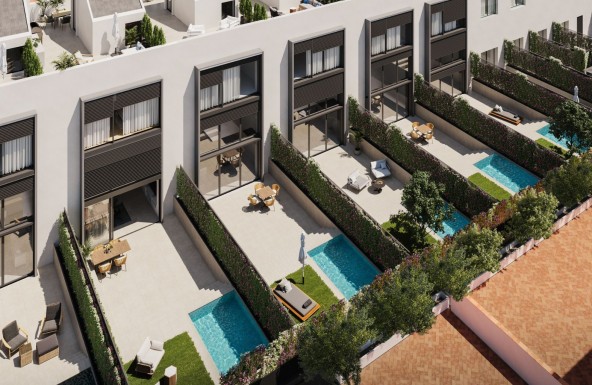

Lux PobleNou